In 2024, the German manufacturing industry will be faced with the task of driving forward digitalization while facing micro and macroeconomic challenges. Fluctuating order intake, weak investment and global trade conflicts are intensifying the situation in an industry that is already struggling with cost pressures, skills shortages and demands for shorter working hours. These factors are fostering increasing uncertainty and skepticism in the sector. In addition, the issues of sustainability, energy costs and environmental protection, combined with the pressure to develop innovative solutions, are coming into focus.
Companies are being called upon to increase their productivity, operate more sustainably and secure competitive advantages through digital transformation, particularly by means of (I)IoT technologies. The challenges include high initial investments, complex supply chains and regulatory requirements, while the trend towards smart factory projects and the use of AI for process optimization are seen as the key to continuous improvement. The integration of digital solutions, collaboration between business departments and IT and the creation of digital platforms are crucial to overcoming challenges and achieving industry goals. This article sheds light on how digitalization can significantly support manufacturing.
Table of contents
- Manufacturing: Status quo
- Digitalization trends in manufacturing 2024
- Use cases for individual value drivers
- Recommendation for manufacturing 2024
Manufacturing: Status Quo
However, in order to take the decisive steps in the traditional manufacturing sector, a thorough assessment of the current situation is required. Tradition and transformation face unique challenges in mechanical and plant engineering, as this industry is historically characterized by its long-term nature, stability and sustainable orientation. This is precisely why it is important not to weaken or completely replace existing standards and functioning processes with new technology, but to adapt them in appropriate places through digitalization to ensure sustainable success.
The advancing digitalization, automation and networking of processes open up new opportunities to increase competitiveness. This development is being driven by the increasing complexity of products, shorter product life cycles and the need for flexible production. Family-run companies in this sector rely on proven methods to find the balance between tradition and innovation. ROI calculations play a key role in evaluating investments in new technologies. Through careful risk assessment, these companies seek to minimize uncertainties associated with the introduction of new technologies.
Clear governance is becoming an essential tool for managing change and ensuring that innovations are in line with the company’s long-term goals. Governance structures enable effective control over digitalization measures, promote transparency and create trust among employees, customers and stakeholders.
Family businesses in the mechanical engineering sector are clearly committed to innovation, adaptability and long-term openness. This means not only integrating new technologies, but also creating an organizational structure and culture that actively promotes change. Change requires a willingness to question existing ways of thinking and to give employees the opportunity to further develop their skills and knowledge as part of the digital transformation.
Overall, the status quo in manufacturing shows that tradition and transformation do not have to be contradictory. Rather, these elements must be integrated into a balanced strategy in order to continue the success story of German manufacturing in an increasingly digitalized world.
Digitalization trends in manufacturing 2024
The ability to recognize trends and changes at an early stage and respond to them with targeted measures is a key component of the innovation strategy. This can be divided into several dimensions, each of which addresses different aspects:
- Technology innovation – focus on data topics
Technology innovations, particularly in the area of data usage, enable a more precise analysis of market conditions, customer behavior and potential efficiency improvements. The targeted use of data analytics and artificial intelligence enables companies to make data-driven decisions and thus gain a competitive advantage.
In order to process this data in real time, the industry is increasingly relying on edge computing, decentralized data processing directly at the source. The Internet of Things (IoT) networks machines and devices, enables comprehensive monitoring and control as well as precise recording of real-time data. Digital twins, virtual models of physical machines, are used to simulate and optimize products and processes in detail even before they are physically implemented.
Artificial intelligence (AI) and machine learning (ML) are playing an increasingly important role in manufacturing. These technologies are used in areas such as predictive maintenance, quality control and automated process optimization. Blockchain technology is used in supply chain management to ensure transparency and security.
- Product innovation – The Internet of Things (IoT), embedded systems and connections from the edge device to the cloud are key elements
The integration of IIoT into the product range not only enables improved monitoring and maintenance of machines, but also creates new business models through data-supported services. The connection of cloud and edge devices ensures seamless data transmission in real time, which leads to more efficient and flexible production processes.
Embedded systems and the seamless networking of edge devices to the cloud are particularly important in the context of IIoT. Successful integration enables the comprehensive networking of machines and the generation of large amounts of data, which leads to valuable insights for product optimization and customer-centric solutions through advanced data analysis. Embedded systems play a central role by embedding additional functions and intelligence in machines and enabling miniaturization and efficiency increases.
The connection of edge devices to the cloud opens up new dimensions in terms of real-time processing and central data management. Edge computing enables fast local decisions, while cloud integration creates a scalable and comprehensive solution basis. Security and data protection aspects are of crucial importance to ensure secure communication between devices and compliance with data protection guidelines.
The integration of standardized interfaces and the life cycle management of networked products are other important topics. Standardized interfaces make it easier for different technologies to work together, while effective lifecycle management ensures that software updates and upgrades can be deployed easily.
- Process innovations – automation and lean management methods are shaping processes
The automation of production processes not only reduces dependence on manual work steps, but also increases precision and efficiency. Lean methods enable companies to continuously optimize their processes and minimize waste.
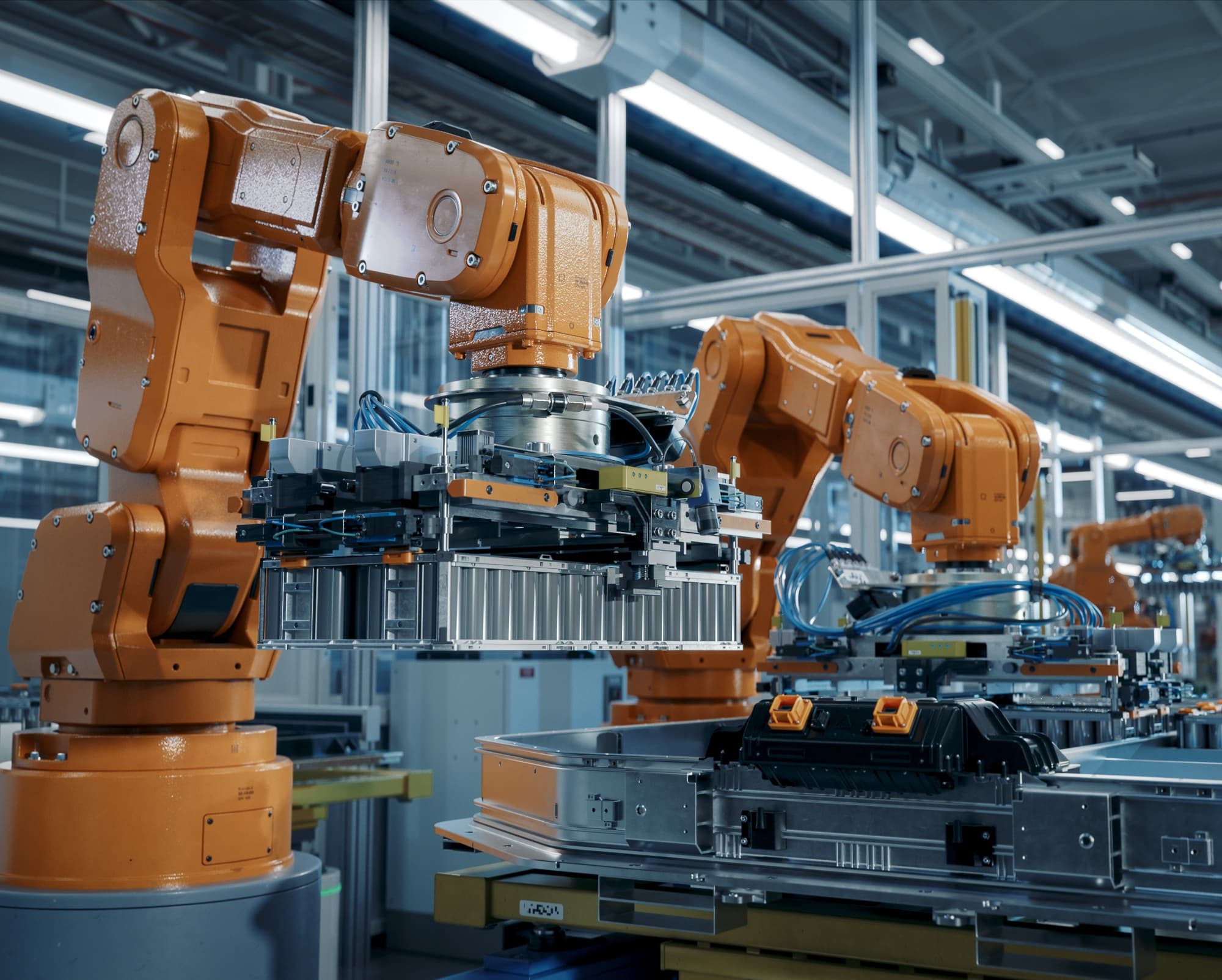
The automation of production processes, led by robots and collaborative robots (cobots), enables more efficient and error-minimized production. The automation of assembly processes plays a decisive role in this.
Digital twins and virtual production offer innovative possibilities for simulating and optimizing products and processes before physical prototypes are created. The use of virtual commissioning tools shortens time-to-market and minimizes commissioning times.
- Business model innovations – the development of new sources of revenue through software-based additional functionalities and digital ecosystems is essential
The integration of software-based functions opens up new opportunities for value-added services. The creation of digital ecosystems enables companies to focus not only on selling physical products, but also on building long-term customer relationships through digital solution offerings.
Use cases for individual value drivers
The integration of digital innovations has a significant impact on various activities in the vertical and horizontal value chain in manufacturing.
- Purchasing & logistics – more efficient supply chains and transparent supply chain management
Digitalization is enabling a profound transformation in purchasing and logistics. By using advanced planning tools and real-time data analysis, companies can carry out more precise planning. This results in optimized inventory levels, minimized storage costs and increased efficiency throughout the supply chain. Real-time tracking of goods provides the ability to monitor deliveries more accurately, which in turn improves responsiveness to market changes and minimizes the risk of supply shortages.
- Research & development – accelerated innovation cycles through big data and analytics methods
The integration of big data and analytics in research and development significantly accelerates innovation cycles. By analyzing large volumes of data, companies can gain profound insights into market trends, customer needs and technological developments. This enables a more precise focus of research activities, shorter development times and faster adaptation to changing market requirements.
In the R&D department in particular, it is crucial to shift the focus away from rigid product innovations and integrate agile methods. Agility makes it possible to react flexibly to changing requirements and new findings. The iterative and collaborative nature of agile working methods not only supports efficiency in the development of new products, but also promotes the creativity and innovative power of teams.
- Production – automation to increase efficiency and quality
The automation of production processes with the simultaneous use of digital solutions is at the heart of the digital transformation in production. By using robotics, intelligent manufacturing systems and automation technologies, companies can not only increase production speed, but also improve the quality of the goods produced. Flexibility is achieved through the ability to react quickly and efficiently to fluctuations in demand.

- Quality assurance – using IoT for real-time monitoring and preventive measures
The integration of the Internet of Things (IoT) into quality assurance is revolutionizing the monitoring of production processes. IoT enables real-time monitoring of machines and products, which allows faults to be detected at an early stage and preventive measures to be taken. This not only ensures product quality, but also increases the efficiency of the entire quality assurance process.
- Sales & marketing – customer-centric approaches through digital platforms and personalized services
Digital platforms play a crucial role. These platforms allow companies to interact directly with their customers and create personalized experiences. The analysis of customer data makes it possible to better adapt sales and marketing strategies to the individual needs of customers. This leads to more effective campaigns, higher customer satisfaction and long-term customer loyalty.
- Service & after sales – predictive maintenance and remote support for optimized customer care
The implementation of predictive maintenance using IoT technologies is revolutionizing the service and after-sales sector. By continuously monitoring machines, companies can anticipate maintenance requirements and take preventative measures. The possibility of remote support makes it possible to provide services more efficiently, minimize downtimes and ensure optimized customer support. This leads to higher machine availability and more satisfied customers.
Recommendation for manufacturing 2024
The upcoming challenges in 2024 require clear action strategies for the German manufacturing industry.
The upcoming challenges in 2024 require not only adjustments on a technological level, but also effective collaboration between business departments and IT to optimize processes and implement sustainable practices. At the same time, the creation of digital platforms is crucial to serve as a technical foundation and enable the end-to-end integration of targeted solutions, including innovative software applications.
The basis for this is a qualified and technologically adept workforce. Therefore, the continuous training of employees in digital skills is crucial. Companies should introduce targeted training programs and advanced training that focus on topics such as data analysis, automation technologies, artificial intelligence and other relevant digital skills. Fostering a learning environment and integrating digital training opportunities will help employees update their skills and adapt to the demands of digital transformation.
Successfully adapting to changing market conditions requires a balance between traditional business models and innovative, digital approaches. Companies should review their existing business models while exploring new digital opportunities. It is important to preserve the strengths of tradition, but also to take advantage of digital technologies. This integration requires strategic planning to ensure that traditional processes are not only maintained but also optimized, while innovative digital approaches are introduced to gain competitive advantage.
Increased investment in digital technologies is essential to meet changing market conditions. Companies should invest in advanced technologies such as big data analytics, artificial intelligence, Internet of Things (IoT) and automation. These investments are crucial not only in production, but also in areas such as research & development, sales & marketing and service & after sales. The implementation of modern technologies enables improved efficiency, quality and customer satisfaction. It is important not only to keep an eye on short-term returns, but also to strengthen the company’s long-term competitiveness and future viability.
Collaboration between specialist departments and IT is therefore crucial for effectively exploiting the opportunities of digitalization. Innovation often arises at the interface between technology experts and specialists from different areas of the company. Companies should therefore form cross-functional teams that develop and implement innovative ideas together. Digital platforms can serve as a collaboration space where specialist departments and IT can come together to exchange ideas and promote innovative solutions. Creating a culture of innovation that promotes collaboration across departmental boundaries is crucial to exploiting the full range of digital opportunities.
Overall, digitalization offers the German manufacturing industry the opportunity to emerge stronger from the current challenges. Companies should see digitalization not just as a necessity, but as an opportunity for innovation and adaptability. The focus should not only be on automating existing processes, but also on developing new, digital business models. An open culture of innovation is crucial – by proactively seizing digital opportunities, the industry can strengthen its position as a pioneer in global manufacturing.