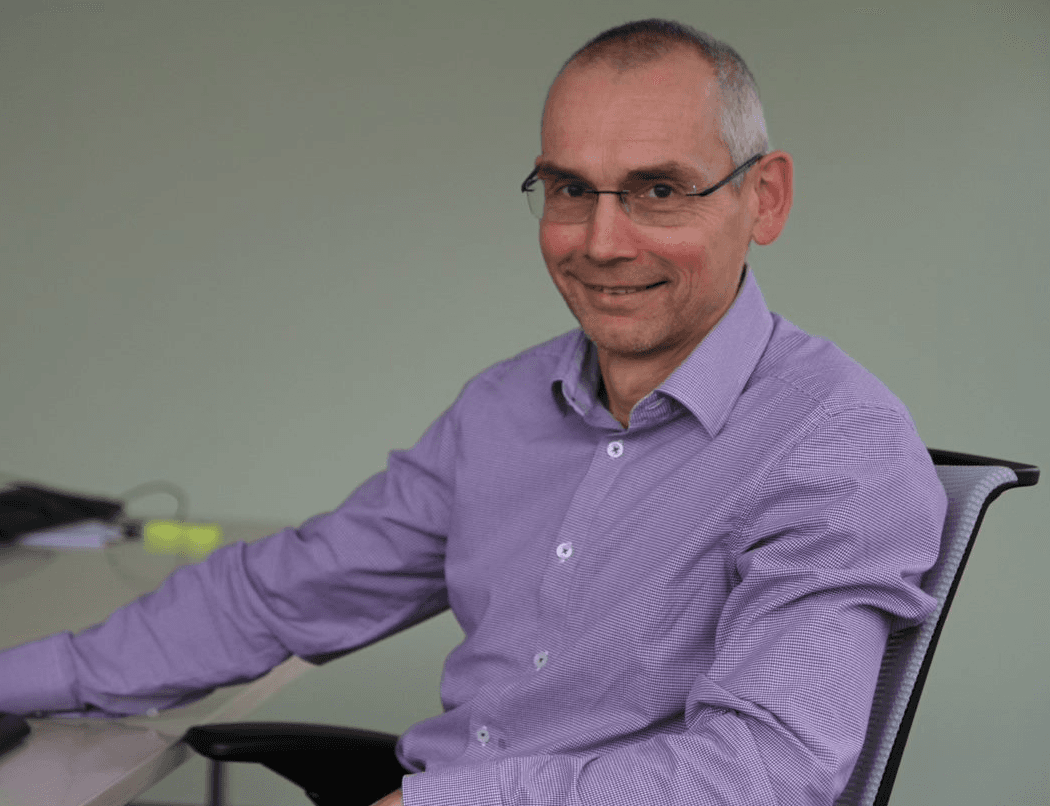
Early career
Robert started to build up his IT knowledge back in university. While in his studies he focused on technical mathematics, there were also classes where he learned about the coding syntax or how to compile a program. Just enough for him to eventually land his first job as a software developer, right after he graduated. As years went by, he did really well and was promoted to project lead and team lead roles. This allowed him to have greater impact on how the company operates, which turned out to be quite crucial.
In early 2000s the agile way of working was getting more popular, and Robert was there to establish it in his teams. Initially this was very difficult, because he was not supported by the old-fashioned management. To succeed he had to take small steps and be careful to not completely disregard the traditional methods. He really learned how to combine these two worlds and understood that each situation needs its own approach. Throughout his career Robert has achieved many great milestones and gathered a lot of experience in various positions – from a developer to a CEO. In 2017 he decided to follow his passion of supporting others on their way to success and joined Cloudflight.
Two big roles in Cloudflight
Robert took over two roles in Cloudflight. In his first role, as a quality engineer, he is responsible for meeting our customers’ expectations. To discover any potential issues, he needs to be able to read a database, setup automatic testing, but also be ready to do exploratory (manual) testing. It is a bit of a detective work, but there is much more to it beyond bug hunting. When a bug is discovered, it needs to be communicated with developers. They can react in many different ways, so it is necessary to be empathetic and know how to talk to people. Robert also works hard on shifting the mindset towards focus on quality in the development process.
Cloudflight offers extensive mentoring programs to develop future generations of experts and leaders. As a part of this program and as his second role, although perhaps even more important than the first, Robert provides mentoring to new team leaders. He humbly admits that when he was younger, he felt jealous of other successful people. Now it makes him happy to see and to help others grow. But what Robert does, is not always just about encouragement and being positive. His mentees must learn to receive and give constructive feedback, which is far from easy. They also need to accept that making mistakes is a great way to learn.
Becoming a great mentor does not come with a certificate or a finished course, but rather with decades of experience, with making mistakes and living through hardships both in professional and personal lives. Robert has found his purpose in bringing his mentees to success and he has been an inspiration and an invaluable part of our team ever since he joined.