New study: The Agentic AI gap
Read now
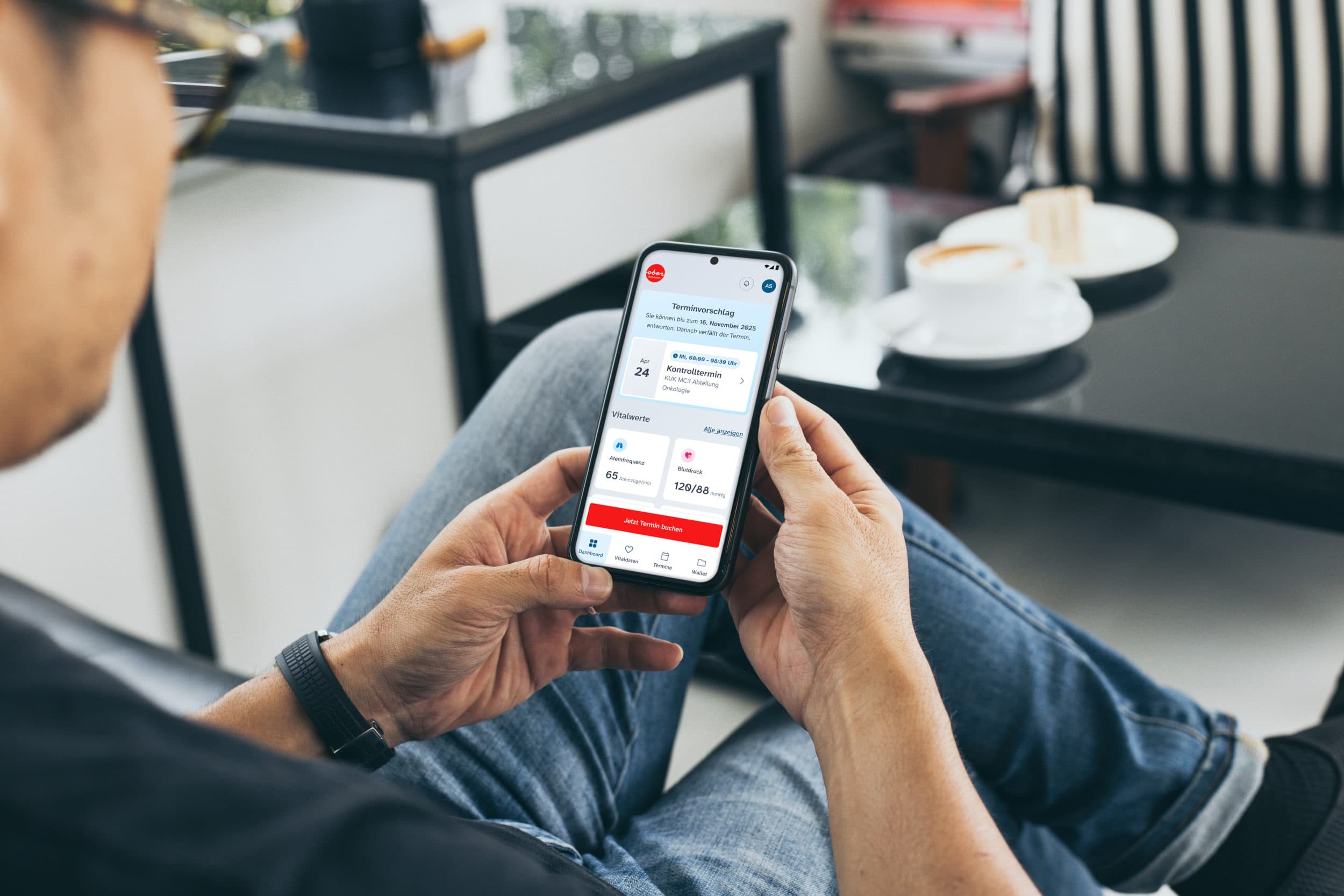
health.portal – Health has never been so easy
The health.portal supports patients throughout the entire digital patient journey – from appointment booking to aftercare. Seamlessly integrated into your existing systems. In your design, tailored to your workflows.
FHIR-based
Use the latest standards
KIS, LIS, RIS, +
Integration with all clinical systems
EHR integration
Synchronization with national health records (ELGA, EPA, …)
Desktop & Mobile
Available as a web portal and as a mobile app
All the benefits of the health.portal at a glance
Integrated EHR access
Patient overview & treatment management
Receive and send referrals & medical reports digitally
Digital consent forms
Real-time availability & surgery waiting times
Secure Matrix-based communication
health.portal features at a glance
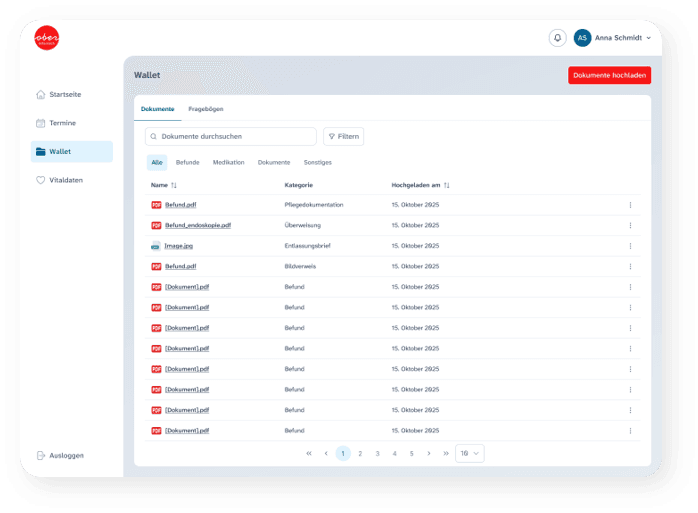
Wallet & EHR Integration
Comprehensive appointment management – search, book, reschedule.
Digital document management in the wallet – upload, store, share, and grant access.
Integration of electronic health records (EHR) directly into the portal (e.g. ELGA, EPA).
- Upload/download of documents, images, and videos
- Retrieval and synchronization of documents from external sources (e.g. ELGA, EPA)
- Patient-controlled access sharing: time-limited, for specific doctors or institutions
- Preview for various file types, filtering by metadata
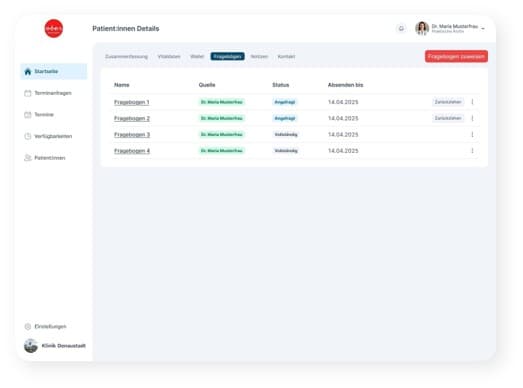
Information sheets and consent forms
Digital management and assignment of consent documents within the treatment process.
- Storage and management of predefined questionnaires
- Direct completion of questionnaires within the portal, with the option to submit them to the provider in advance
- Integration into service workflows (e.g. consent forms provided as PDFs for patient information after appointment booking)
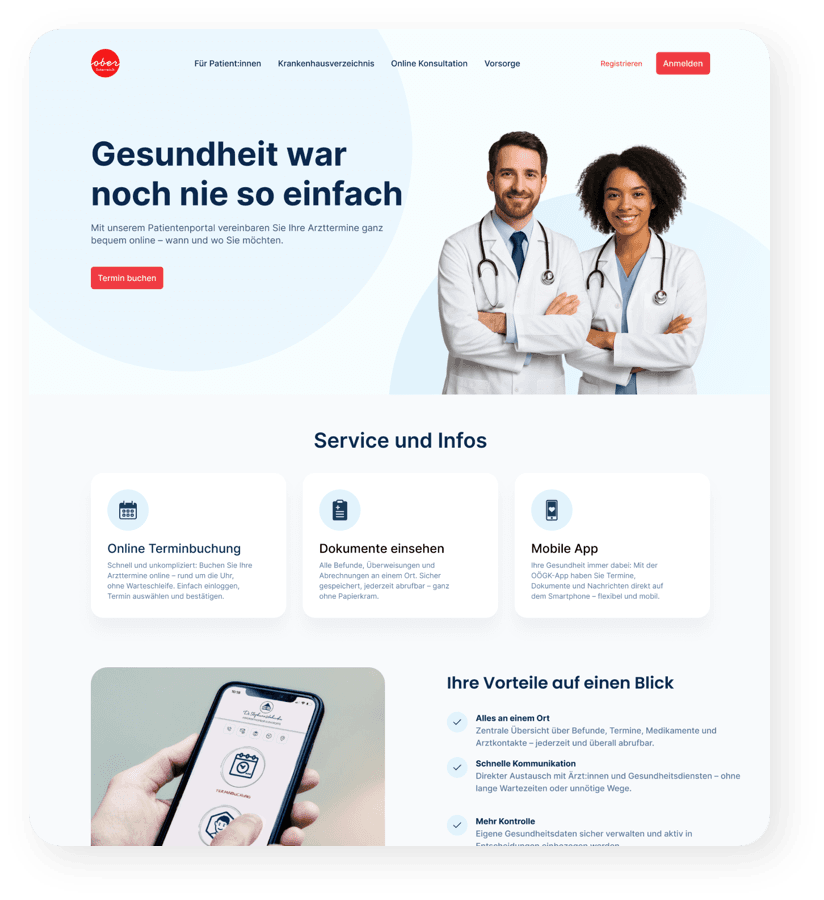
Content Management
General health information for patients, accessible without registration.
- Content Management System (CMS) for customers’ editorial teams
- Option to integrate third-party content (e.g. surgical waiting time lists)
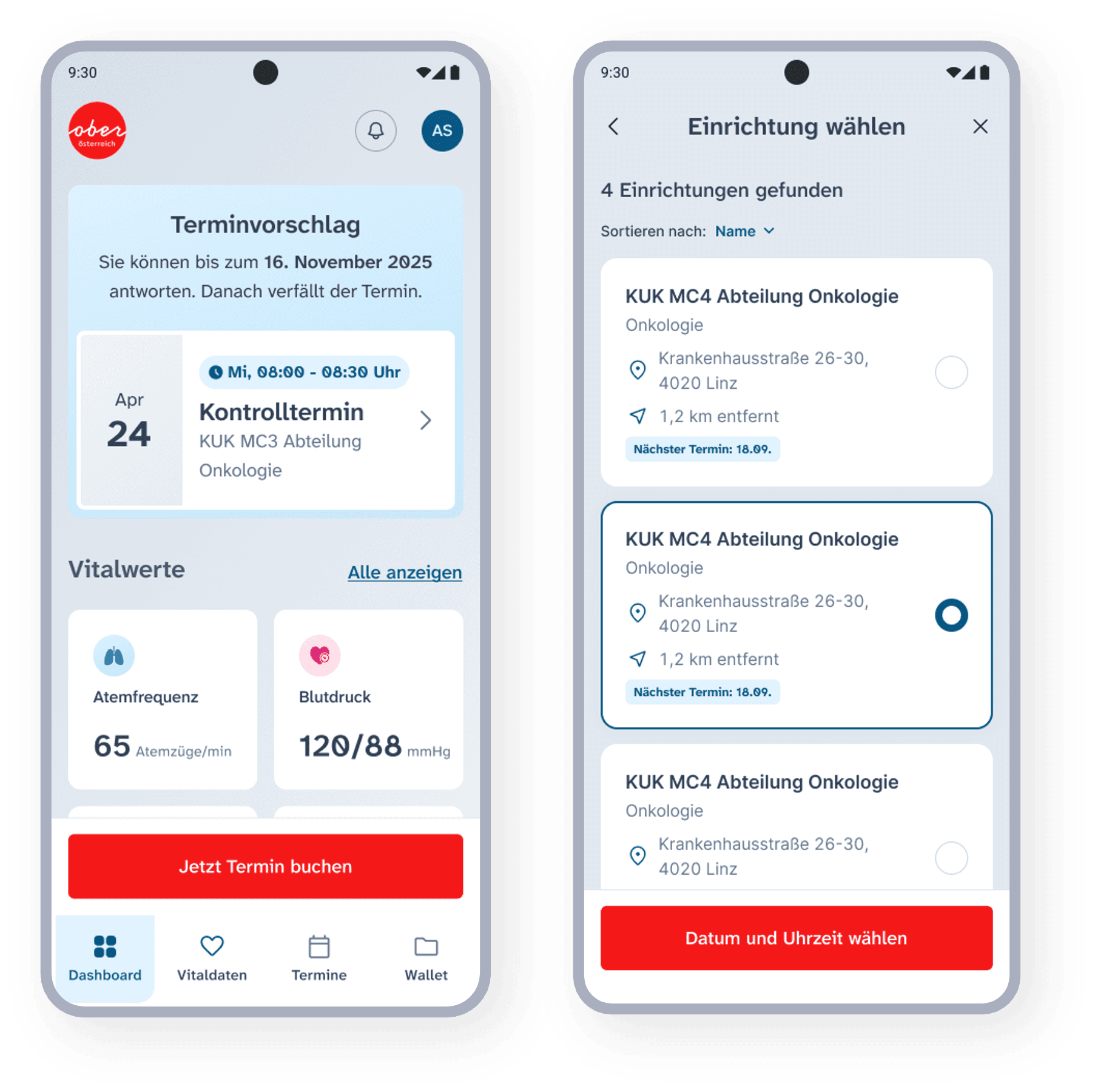
Mobile Apps
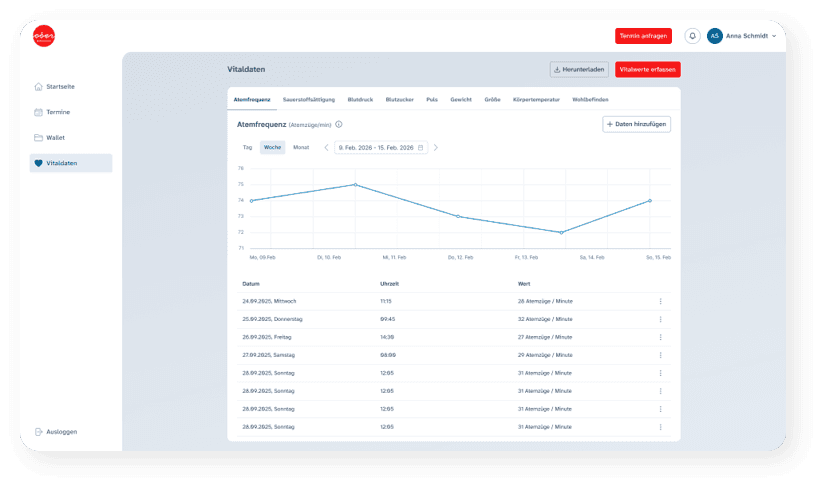
Vital data
Recording, management, and visualization of vital data – entered manually or automatically via wearables (smartwatches such as Apple, Garmin, Fitbit, etc.).
The data is only accessible to doctors to whom patients have explicitly granted access.
- Integration of wearables (Apple, Garmin, etc.)
- Trend visualization: tabular and graphical
- Patient-controlled sharing: choose which parameters are visible to doctors
health.portal in Action

The Upper Austrian Health Holding (OÖG), with 180,000 inpatient cases per year, is the largest hospital operator in Upper Austria. Fragmented IT systems previously prevented a unified digital access point for patients, and there was no standardized channel for document exchange or access to electronic health records.
With the health.portal, patients now have a central digital access point to all healthcare services. At the same time, OÖG benefits from a scalable platform across all facilities and, thanks to HL7 FHIR integration, is now ready for the European Health Data Space (EHDS).

FAQ
The health.portal uses pineIT’s FHIR-based integration platform (pIT FUSION) for native connectivity to electronic health records. This allows medical reports, medications, vaccination records, and more to be accessed directly within the portal—without the need for separate interface development.
Patients can view their documents, selectively share them with healthcare providers, or grant time-limited access. All communication is based on the HL7 FHIR R4 standard, making the system fully prepared for the European Health Data Space (EHDS).
The health.portal integrates into your existing system landscape via standardized FHIR interfaces—including hospital information systems (HIS), laboratory information systems (LIS), and radiology information systems (RIS).
National identity providers (e.g. ID Austria) are connected via OpenID Connect, allowing patients to securely log in using their existing credentials.
In addition, the portal supports integration with wearables (including Apple Health, Garmin, Fitbit) for capturing vital data, as well as connections to content management systems for editorial health information.
Yes, at any time. The health.portal is built in a modular way—the proven core (integration platform, data repository, portal architecture) remains stable, while individual features can be added flexibly.
This includes both new functional modules and adjustments to existing workflows, permission logic, or third-party system integrations.